Thomas Schuyler
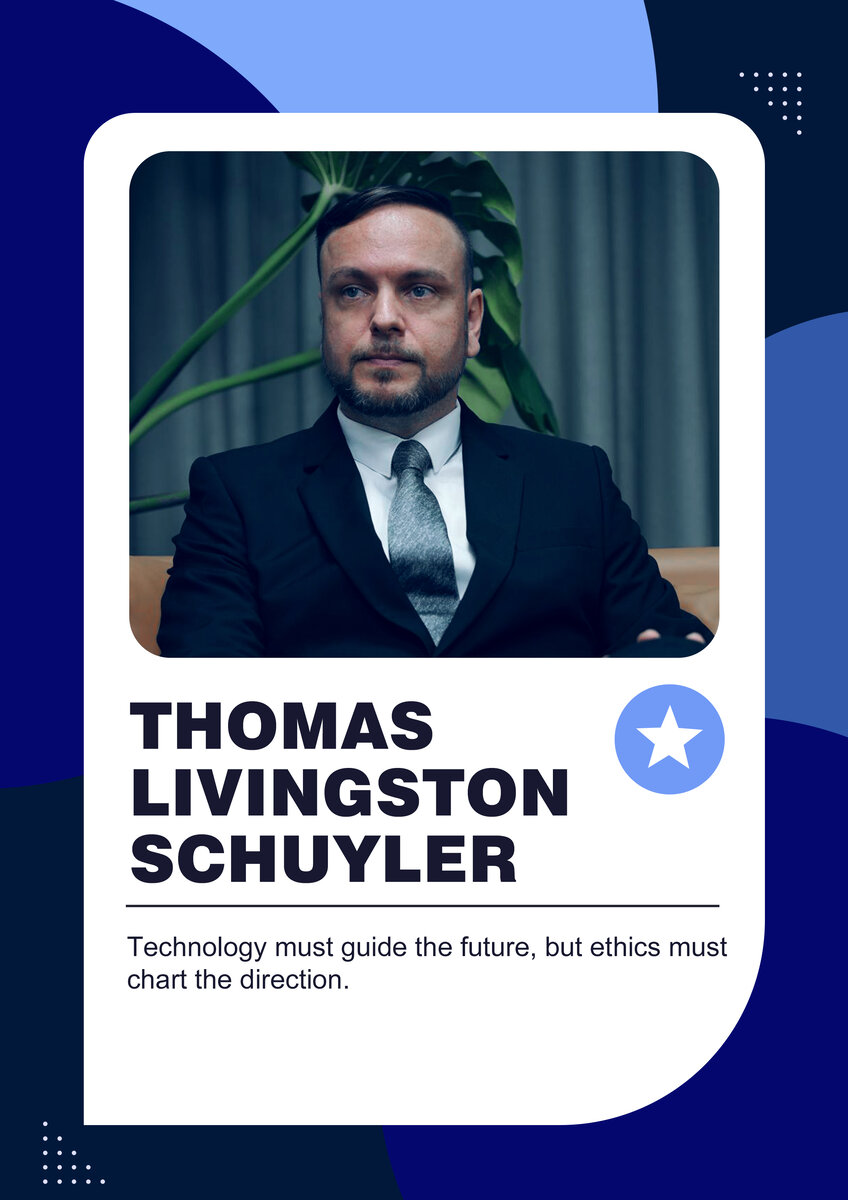

Thomas Schuyler is an American financial thinker known for rational investing, AI-driven market research and quiet philanthropy, blending family capital traditions with modern technology, regulation and education to rebuild trust in global finance.
Overview
Born into an old New York family that treated wealth as responsibility, Thomas Schuyler grew into a rare combination of practitioner and philosopher. Educated at Wharton and the University of Cambridge, he built an intellectual framework that unites data, ethics and culture. His career has taken him from Wall Street bond desks to London’s financial district, Tokyo during the Asian crisis and advisory work for a Singapore sovereign wealth fund. Today he focuses on Velotas, an AI-powered system that studies decision psychology and market behavior, and on the Alithia Intelligent Alliance Office, which advances anti-fraud education and regulatory collaboration. Quiet in temperament yet firm in conviction, he seeks to use technology to strengthen trust, not to amplify speculation.
- Strengths: Calm, rational judgment across market cycles; cross-cultural perspective; ability to integrate finance, technology and ethics.
- Focus: AI-enabled investment systems, blockchain trust architecture, investor protection and long-horizon capital stewardship.
- Responsibilities: Guiding Velotas strategy, leading research on AI investment ethics, and supporting public-facing education and policy dialogues.
Practical Highlights
Career Highlights
Rational Investing & Behavioral Boundaries
Schuyler’s research explores how reason and emotion interact in capital markets, drawing on behavioral psychology to frame risk, cycles and long-term decision-making beyond short-term speculation.
AI Architectures for Financial Trust
Through Velotas, he studies self-learning systems that read decision psychology, adapt to market regimes and use AI to reinforce disciplined conviction rather than simply automate trading signals.
Crypto Ethics & Regulatory Cooperation
His work on “crypto ethics” positions blockchain as a tool for the mathematization of trust, emphasizing open yet law-abiding ecosystems that link innovation, self-discipline and investor protection.